 MultiMed Engineers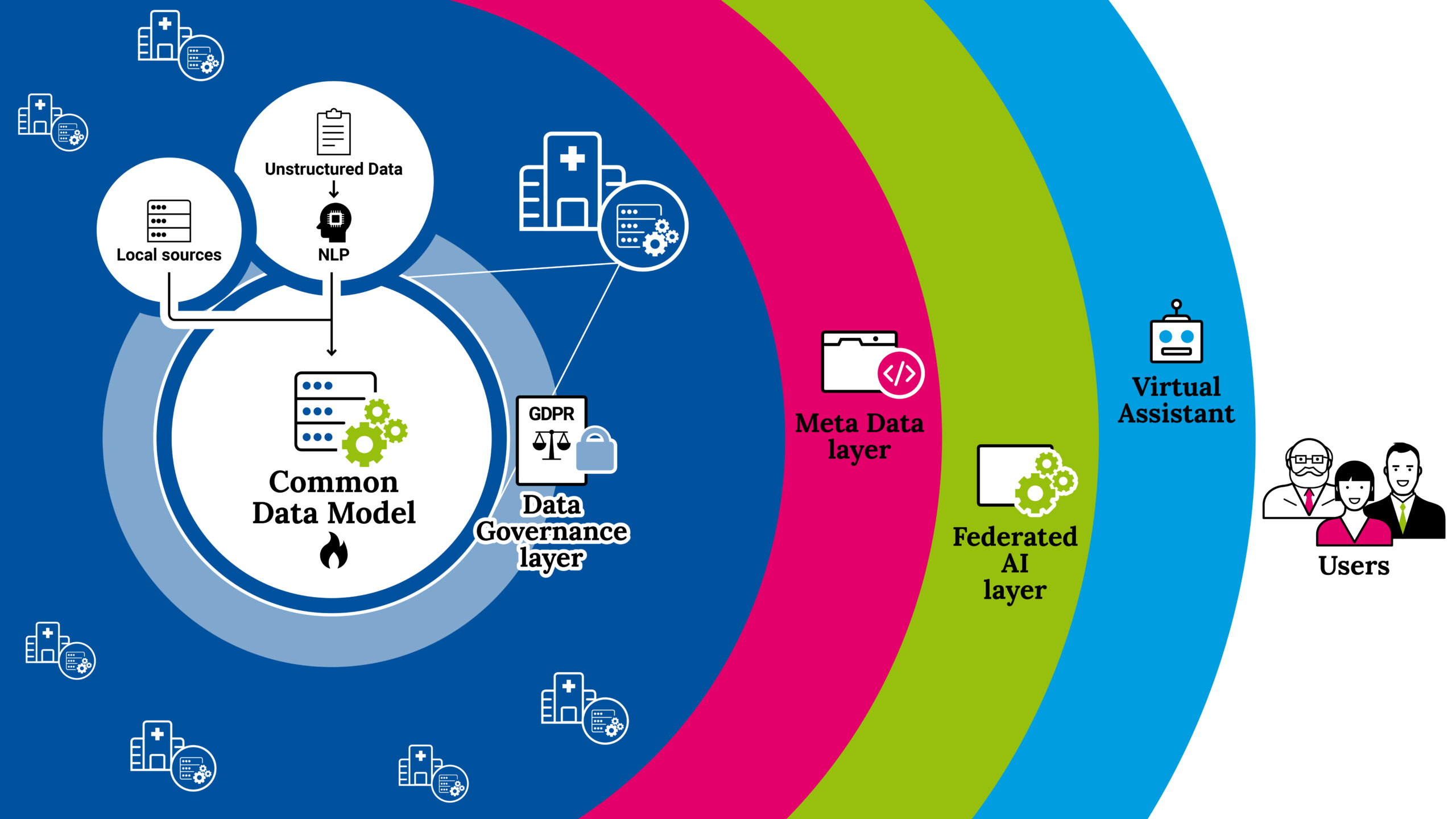
The IDEA4RC project is delivering a portfolio of innovative digital solutions designed to support the secure, interoperable, and effective use of health data in rare cancer research.
Developed through a multidisciplinary European collaboration, these technologies address key challenges across the health data lifecycle, including data extraction and annotation, cohort discovery, artificial intelligence development, data quality assessment, access governance, and patient-driven data sharing.
Although originally developed as components of the IDEA4RC ecosystem (their brochures are available here), these solutions can also be adopted independently in a variety of healthcare, research, and innovation contexts.
By combining advanced technologies with practical usability, they demonstrate how European research can generate reusable digital assets that create lasting value for healthcare organizations, researchers, and ultimately patients.
NLP Annotator
NLP Annotator is an advanced clinical data annotation solution designed to streamline the review of retrospective medical records and support the creation of high-quality, structured datasets.
The platform enables efficient annotation of clinical notes, aimed at training structured data extraction algorithms, while preserving direct traceability between extracted information and source documentation. This capability facilitates data validation, auditing, and advanced querying activities, ensuring transparency throughout the data curation process.
NLP Annotator is particularly valuable in domains such as oncology and other clinical specialties where historical patient records represent a critical source of knowledge for research and clinical studies.
With browser-based access and non-intrusive integration requirements, the solution can be deployed with minimal IT effort, helping healthcare organizations unlock the value of existing clinical documentation and transform it into actionable data assets.
FHIR-Oriented Cohort Builder
The FHIR-Oriented Cohort Builder enables researchers to define, explore, and securely estimate patient cohort sizes across distributed healthcare data repositories using the HL7 FHIR interoperability standard.
Designed to support feasibility studies, clinical research planning, and epidemiological investigations, the solution allows users to formulate cohort eligibility criteria and retrieve aggregate cohort cardinalities while preserving data privacy and institutional data sovereignty.
The platform is suitable for a broad range of users, including clinical researchers, epidemiologists, biomedical data scientists, and healthcare IT professionals involved in data-driven research initiatives.
INFER – aI developmeNt Framework for hEalth oRganisations
INFER is a web-based Integrated Development Environment (IDE) that provides researchers with a comprehensive workspace for developing biomedical Artificial Intelligence and Machine Learning applications.
The platform supports the entire model development lifecycle, including dataset management, feature engineering, model training, validation, evaluation, and deployment within a collaborative and user-friendly environment.
By abstracting infrastructure complexity and reducing technical barriers, INFER enables research teams to focus on scientific objectives and innovation activities rather than low-level system management. The solution is particularly well suited to biostatistical and biomedical research groups seeking a ready-to-use environment for AI and ML experimentation.
IDEA4RC Quality Check Helper
The IDEA4RC Quality Check Helper is a semi-automated data quality assessment solution designed to support healthcare organizations in evaluating and improving the quality of tabular health datasets.
The tool provides actionable insights into data completeness, consistency, and accuracy, helping users identify potential quality issues and strengthen data governance processes.
Combining accuracy, efficiency, and ease of use, the Quality Check Helper enables healthcare professionals, researchers, and administrators to maintain high-quality data standards while reducing the effort traditionally associated with quality assessment activities.
Data Permit Platform
The Data Permit Platform is a web-based solution that supports the preparation, submission, management, and evaluation of data access requests within federated learning and distributed research environments.
The platform facilitates transparent and compliant governance workflows by enabling stakeholders to manage authorization processes in a structured and auditable manner. In doing so, it contributes to the secure and responsible use of healthcare data across organizational boundaries.
Data Altruism Manager
The Data Altruism Manager empowers individuals to voluntarily contribute their data to rare cancer research initiatives in accordance with the principles of the European Data Governance Act and the governance framework established within the IDEA4RC ecosystem.
The solution promotes patient participation, transparency, and trust in data sharing processes, enabling healthcare organizations and research communities to foster more inclusive and collaborative approaches to scientific research.
Enabling the Future of Data-Driven Rare Cancer Research
Together, these solutions represent important building blocks of a broader digital ecosystem designed to advance health data interoperability, governance, analytics, and collaborative research across Europe.
As tangible outcomes of the IDEA4RC project, they demonstrate how innovative digital technologies can support the responsible use of health data, accelerate scientific discovery, and contribute to more effective and personalized care for patients affected by rare cancers.
By extending their adoption beyond the project itself, these solutions have the potential to continue generating value for healthcare organizations, research institutions, and innovation ecosystems well into the future.
Further valuable components, beyond the ones listed above, are being currently pilot-tested in the frame of the IDEA4RC workplan and will be released soon.