 MultiMed Engineers
Head and Neck Cancer survivors may experience persistent effects of cancer and its treatment that significantly affect their health-related quality of life (HRQoL). These may include problems with swallowing, speech and nutrition, fatigue, emotional distress and difficulties in social and occupational reintegration.
The BD4QoL Project investigated how digital technologies, Artificial Intelligence and patient-centred monitoring could improve the follow-up of Head and Neck Cancer survivors. The BD4QoL platform combines patient-reported information, behavioural and other data collected through digital technologies, predictive models and tools supporting interaction between survivors and healthcare professionals.
As part of the Project, MultiMed Engineers conducted a Health Technology Assessment (HTA) to investigate an additional question: can the health benefits potentially generated by this type of digital follow-up also justify its economic cost?
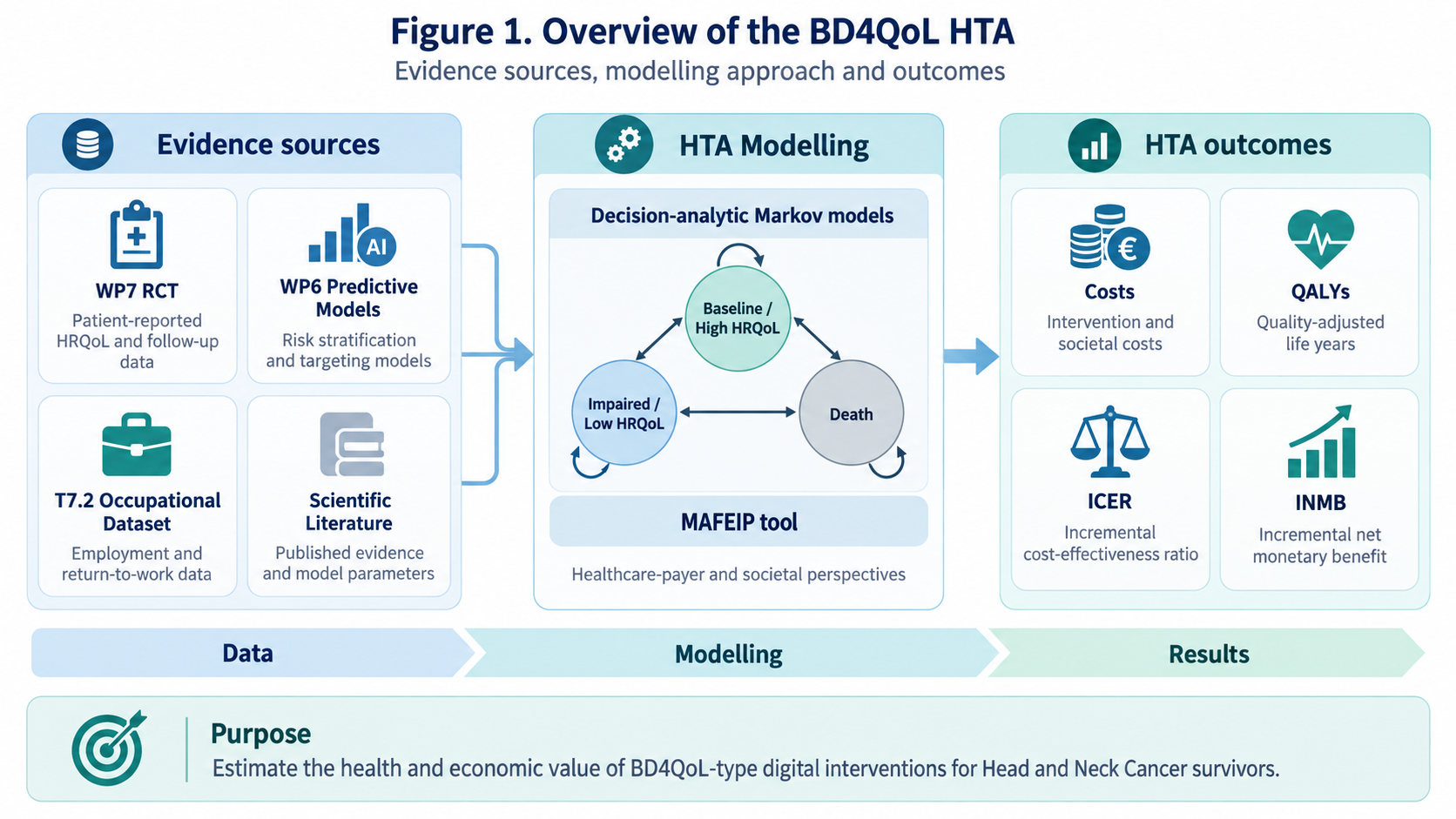
The assessment was performed using the MAFEIP Tool and decision-analytic Markov modelling. Evidence was drawn from several sources generated within the project, including the BD4QoL randomized clinical study, the predictive models developed by the project, an occupational dataset on cancer survivors, and scientific literature (Figure 1).
The economic value of preserving quality of life
The main analysis focused on the primary objective of BD4QoL: preventing or delaying clinically meaningful deterioration in the overall HRQoL of Head and Neck Cancer survivors.
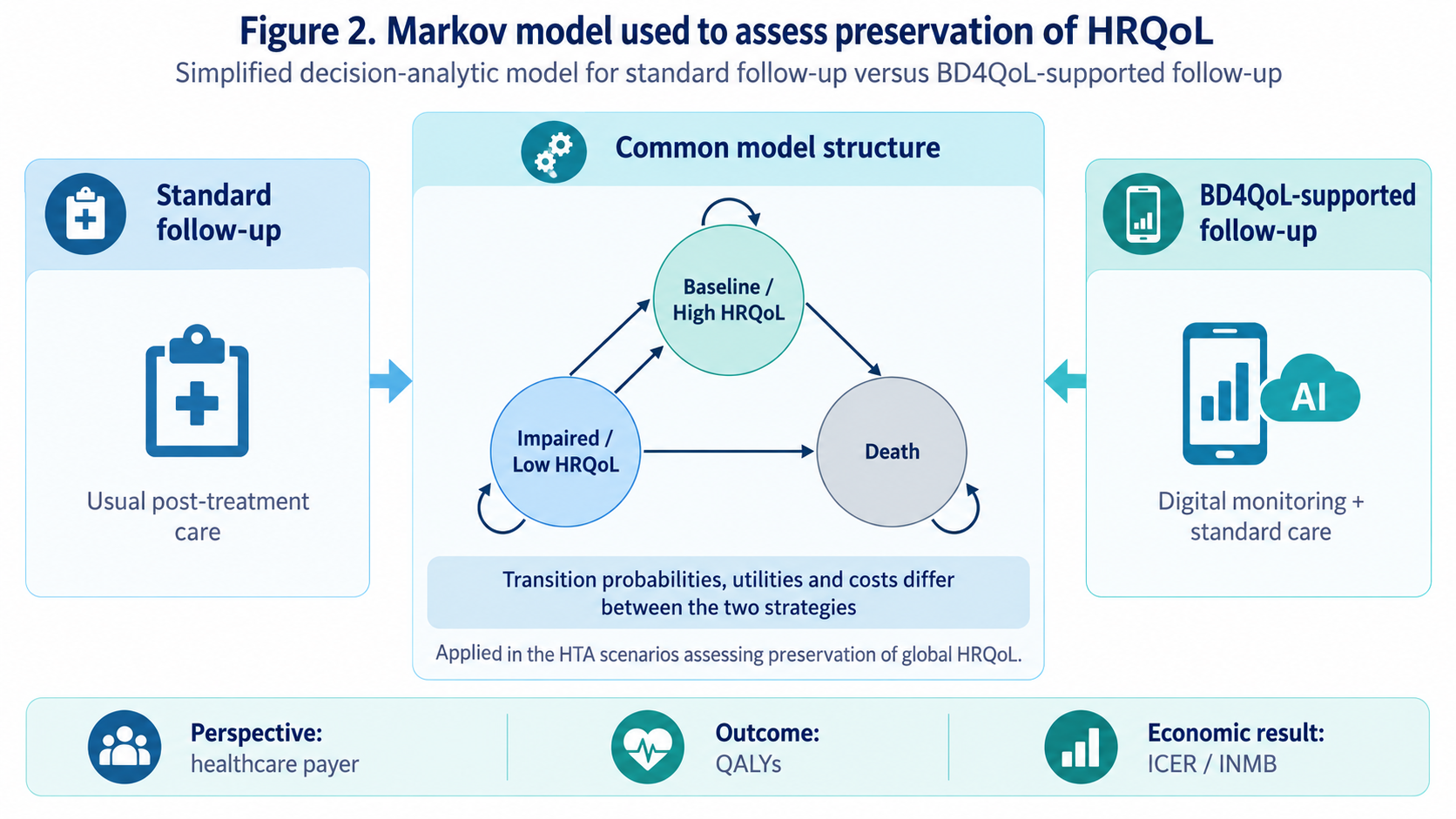
Two alternative Markov models were developed to represent different assumptions about how HRQoL may deteriorate after treatment. Both compared BD4QoL-supported follow-up plus standard care with standard follow-up alone, one assuming HRQoL stabilises after the first year, the other allowing deterioration to occur over subsequent years.
The models consider not only the costs associated with the digital intervention, but also the additional quality-adjusted life years — QALYs — generated by maintaining survivors in a better health state (Figure 2).
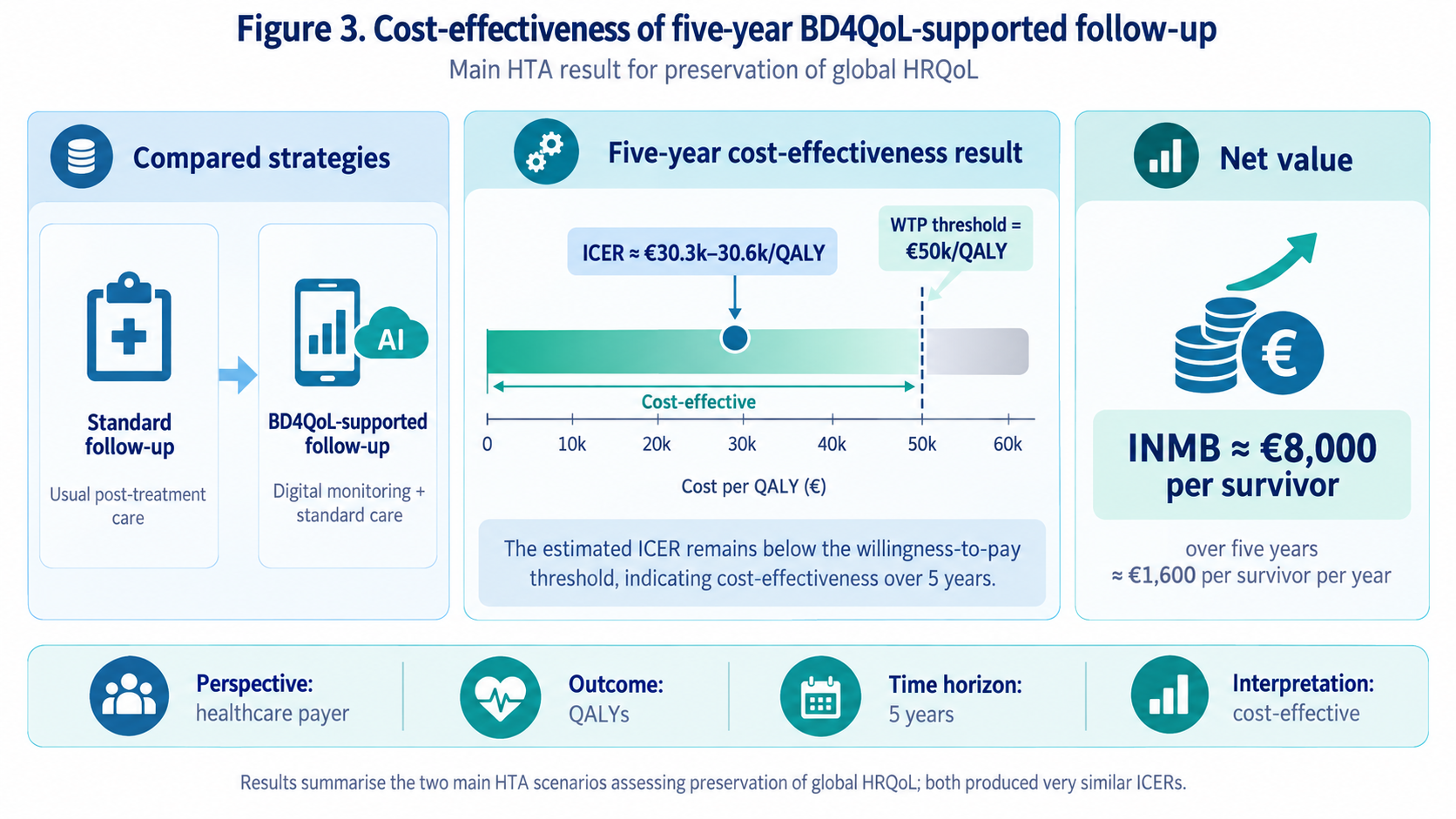
An important result emerged when BD4QoL-supported follow-up was modelled over a five-year period after cancer treatment: despite using different assumptions on the evolution of HRQoL, the two models produced very similar results, with an Incremental Cost-Effectiveness Ratio (ICER) of approximately €30,300–30,600 per QALY.
At a willingness-to-pay threshold of €50,000/QALY, this corresponds to an Incremental Net Monetary Benefit (INMB) of approximately €8,000 per survivor over five years, or around €1,600 per survivor per year.
Sensitivity analyses indicate that this conclusion is relatively robust to changes in the main model parameters. The analysis also shows the importance of defining an appropriate duration for digital follow-up: under a lifelong use assumption, economic headroom becomes smaller, whereas concentrating the intervention in the years following treatment produces substantially more favourable results.
Using predictive models to target supportive interventions
A further analysis investigated whether the predictive models developed by BD4QoL could improve the economic efficiency of existing supportive interventions.
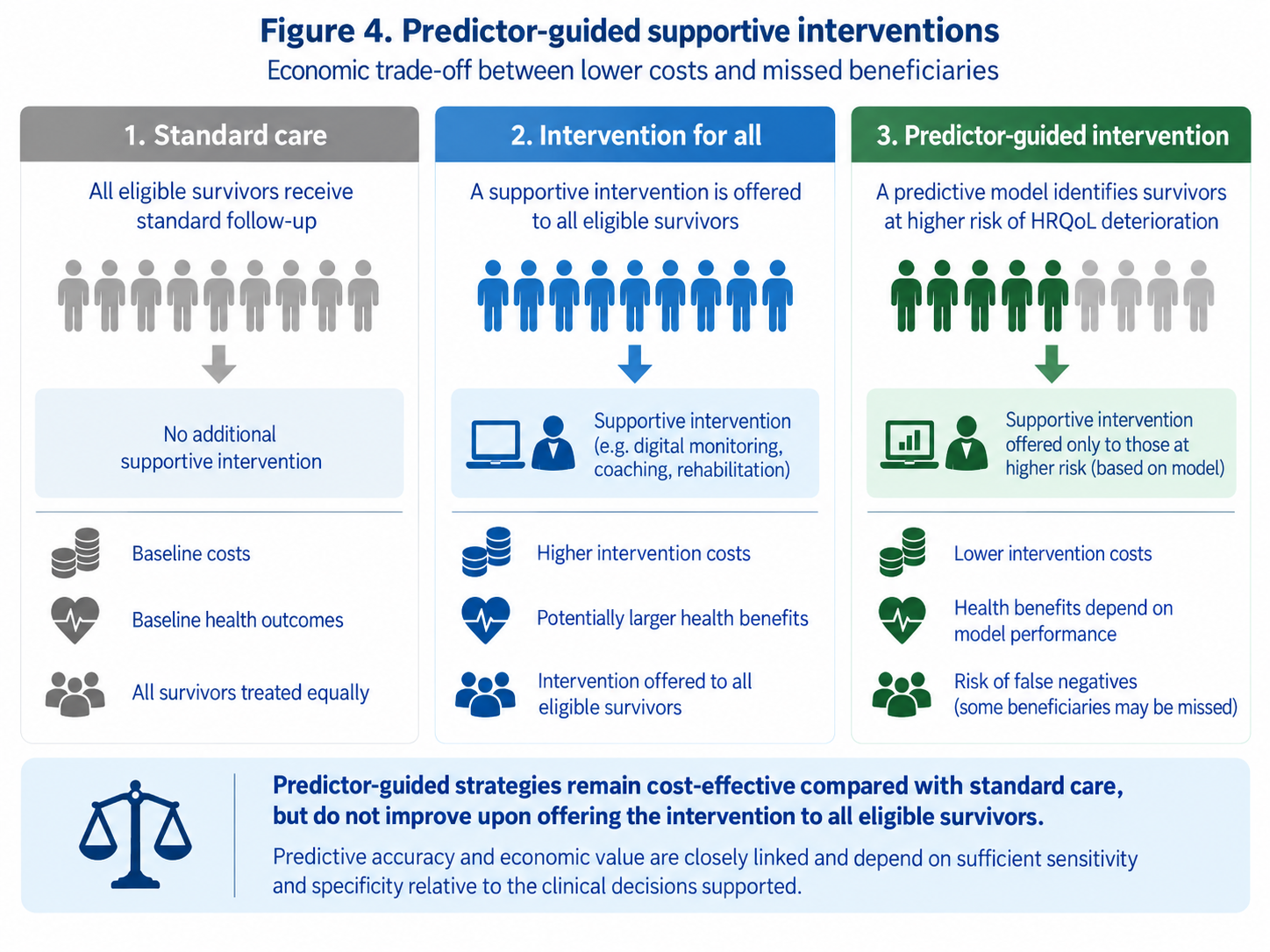
The principle is attractive: rather than offering an intervention to all eligible survivors, a predictive model could identify subjects at greater risk of future HRQoL deterioration and concentrate resources on them.
The HTA, however, highlights an important trade-off.
Predictive targeting can reduce the number of people receiving an intervention and therefore reduce costs. But false-negative predictions may also exclude survivors who could have benefited from it. In the scenarios analysed in BD4QoL, predictor-guided strategies remained cost-effective when compared with standard care, but did not improve upon the strategy of offering the intervention to all eligible survivors.
This result illustrates that predictive accuracy and economic value are closely interconnected. A predictive model used for resource allocation must achieve sufficient sensitivity and specificity not only as a statistical model, but also in relation to the consequences of the clinical decisions that it supports.
Looking beyond healthcare: supporting return to work
Head and Neck Cancer can also have substantial consequences outside the healthcare system. Survivors may have difficulties returning to work or maintaining previous levels of employment and income, generating important costs both for individuals and society.
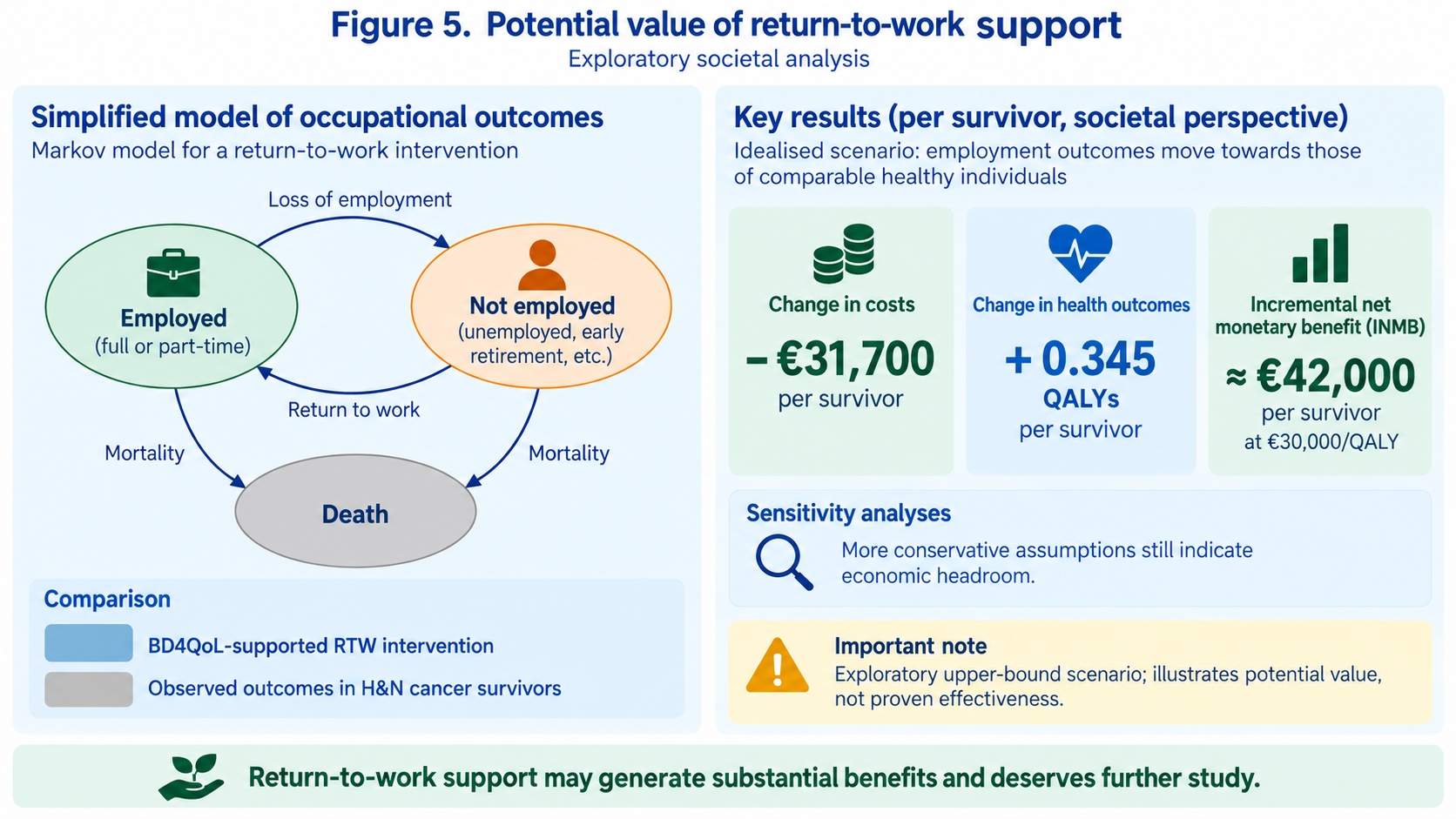
The final part of the HTA therefore explored a possible future use of BD4QoL as a return-to-work support tool.
Because occupational outcomes were not collected within the BD4QoL randomized clinical study, this analysis should not be interpreted as evidence of an observed effect of the platform. Instead, an analysis-of-extremes approach was used to estimate the economic headroom potentially available to an effective return-to-work intervention.
This exploratory assessment was made possible by the occupational dataset curated by project partner SEPI within Task 7.2, which provided the evidence needed to characterise employment outcomes and productivity losses among head & neck cancer survivors.
The model compared current employment outcomes among cancer survivors with an idealised scenario in which a BD4QoL-supported intervention restores employment outcomes towards those observed in comparable healthy individuals.
From a societal perspective, the potential impact is substantial. In the idealised scenario the intervention is dominant, meaning that it simultaneously generates health benefits and reduces overall societal costs. The model estimates approximately €31,700 in savings per survivor, together with a gain of approximately 0.345 QALYs, corresponding to an INMB of around €42,000 per survivor at a €30,000/QALY willingness-to-pay threshold.
Sensitivity analyses using progressively more conservative assumptions continue to indicate significant economic headroom. These results therefore identify return-to-work support as a promising area for further research and development, rather than demonstrating the effectiveness of a specific intervention already tested by BD4QoL.
From clinical effectiveness to value-based digital health
The BD4QoL HTA illustrates why the assessment of digital health technologies should extend beyond technical performance or clinical effectiveness alone.
For digital solutions supporting cancer survivorship, the relevant question is also whether improvements in quality of life can be achieved at a cost that represents good value for healthcare systems and society.
The results suggest that a BD4QoL-type digital follow-up intervention can provide economically sustainable support to Head and Neck Cancer survivors, particularly when concentrated in the years following treatment. At the same time, the analyses identify where further improvements — for example in predictive model performance or in interventions supporting return to work — could generate additional value.
The work therefore provides a quantitative basis for the further development, exploitation and adoption of digital technologies for personalised cancer survivorship care.